

Outsource Social Media Management Cost in 2026: Real Pricing
The outsource social media management cost in 2026 ranges from a limited freelance engagement below $1,000 per month to about $5,107 per month for the average agency project in Clutch's verified data. A US social media manager costs approximately $11,520-$16,681 per month after average employer benefits and payroll costs, while published offshore salary benchmarks range from about $509 per month in the Philippines to $1,900-$3,600 fully loaded in Latin America. Your actual budget depends on platform count, content volume, video requirements, community coverage, paid advertising, and whether you need occasional production or a dedicated 160-hour-per-month employee.
How Much Does It Cost to Outsource Social Media Management?
A practical monthly budget is roughly $1,000 or less for narrowly defined execution, $1,300-$3,600 for offshore individual capacity, and around $5,000 for a typical agency engagement. Clutch's 2026 pricing guide reports an average verified social media agency project value of $61,148.53 over approximately 12 months, equivalent to $5,107.28 per month. Listed agency rates most commonly fall between $25 and $49 per hour. Those figures generally exclude the client's advertising spend.
Social media management cost at a glance
| Hiring model | Indicative monthly cost | Best suited to | Important limitation |
|---|---|---|---|
| Limited freelancer | Often below $1,000 for narrow deliverables | Several posts, design assignments, editing, or temporary coverage | Scope and availability are limited; no universal market rate applies |
| Offshore individual | $509 reported Philippine average salary; $1,333-$2,500 Latin American mid-level base salary | Consistent execution and substantial weekly workload | Employment, provider, shift, software, and management costs may be additional |
| Social media agency | $5,107 average monthly engagement in Clutch data | Strategy plus access to several creative and advertising disciplines | Hours are shared and paid-media spending is usually separate |
| US employee | $11,520-$16,681 fully loaded before office and management overhead | Institutional knowledge, local relationships, and internal ownership | Highest fixed cost and a longer recruiting commitment |
These models are not perfect substitutes. A $700 assignment covering scheduled posts is different from an agency engagement involving strategy, professional video, daily moderation, paid campaigns, and attribution reporting. Before comparing proposals, normalize each price into expected monthly hours, platforms, deliverables, revision rounds, response coverage, and reporting responsibilities. A cheaper quote can become expensive if your founder still spends 30 hours per month rewriting captions, requesting files, and answering routine comments.
Demand for outside capacity is established but not universal. According to Clutch's survey of 500 SMB decision-makers, 84% already outsourced some operations, 70% expected to increase outsourcing in 2025, and 45% anticipated outsourcing marketing and advertising. Meltwater found that 25.8% of companies outsourced at least some social media management in 2025, while nearly three-quarters kept the entire function in-house.
What Does Outsourced Social Media Management Include?
Outsourced social media management usually combines planning, content production, publishing, community interaction, and measurement, but the precise boundary must be written into the scope. Basic packages may only schedule client-supplied material. Broader arrangements can include platform strategy, copywriting, original graphics, short-form video, influencer coordination, social listening, paid-media support, and customer-service escalation.
Production is the most commonly transferred work. Meltwater's 2025 global survey found that companies outsourced content production at a 17% rate, paid social at 16%, and video production at 14%. The pattern makes operational sense: these activities require repeatable creative capacity, whereas executives often want positioning, crisis decisions, and sensitive customer conversations to remain under internal control.
- Strategy: audience definitions, channel roles, competitive research, campaign themes, and a 30- or 90-day content plan.
- Creation: captions, carousels, graphics, short-form video editing, thumbnails, hashtags, accessibility text, and repurposed material.
- Operations: scheduling, link checks, tagging, approval routing, asset organization, and platform-specific quality assurance.
- Community management: comment and direct-message triage, response templates, lead routing, and escalation of complaints or account threats.
- Measurement: platform analytics, campaign tagging, traffic and lead reporting, monthly insights, and tests for improving future content.
- Paid social support: campaign setup, audience testing, creative versions, budget pacing, and reporting; media spend should appear as a separate budget line.
Confirm what is excluded. Professional photography, on-location filming, actors, influencer fees, stock media, advanced animation, social-listening software, weekend moderation, and crisis communications commonly require additional money or specialists. Ownership also matters: your agreement should state that your business owns approved copy, editable design files, raw footage, account audiences, reporting data, and other commissioned intellectual property after payment.

Agency vs. Freelancer vs. Offshore Social Media Manager Costs
The best model depends less on the cheapest headline rate than on how much capacity and multidisciplinary coverage you require. A freelancer is usually appropriate for a contained assignment with few dependencies. An agency supplies multiple skill sets and absence coverage. A dedicated offshore social media manager works inside your systems for a full schedule, providing more continuity than project-based labor without the fully loaded cost of a US employee.
Comparison of outsourced social media operating models
| Model | Capacity and control | Economic structure | Best choice when |
|---|---|---|---|
| Freelancer | One person's skills and available hours | Project, retainer, or hourly payment | You need a defined skill such as copy, design, editing, or posting |
| Agency | Shared strategists, creators, buyers, and account managers | Typical listed rate of $25-$49 per hour; average engagement about $5,107 monthly | You need coordinated multidisciplinary coverage and provider accountability |
| Dedicated offshore manager | Approximately 160 hours monthly under your processes | Salary or flat staffing invoice plus applicable local employment and provider costs | You have recurring execution work and can provide strategy or clear ownership |
| US employee | Full internal control and institutional knowledge | Salary plus approximately 42.7% average compensation load | The role requires local presence, senior brand ownership, or market relationships |
A virtual assistant and a social media manager also serve different purposes. A general assistant can schedule approved posts, organize assets, collect analytics, and monitor an inbox. A qualified manager should be able to interpret audience behavior, adapt copy to each platform, direct creative, make channel recommendations, and explain why a campaign affected qualified traffic or leads. Hiring an inexpensive assistant while expecting senior strategy creates a role-design problem rather than a staffing bargain.
Hybrid outsourcing is the safest default for many established brands. According to Meltwater's 2025 global survey, only 3.0% of companies outsourced all social media management, while 22.8% used partial outsourcing. Keep strategic positioning, final approval, crisis decisions, and high-risk customer cases internal; outsource predictable production, scheduling, design, editing, paid-social operations, or extended-hours monitoring.
US In-House vs. Offshore Social Media Manager Cost Comparison
Offshore salary benchmarks are substantially below US compensation, although published salary differences are not guaranteed like-for-like savings. LHH's 2025 Salary Guide places US social media manager base pay at $96,900-$140,300 annually, with a $114,700 average. That average equals about $9,558 per month before employer costs and approximately $13,636 after applying the average private-industry compensation load.
According to the US Bureau of Labor Statistics, benefits represented 29.9% of private-industry compensation in December 2025, making total compensation approximately 42.7% higher than wages alone. The conversion is often calculated incorrectly: because wages were 70.1% of total compensation, an employer must divide salary by 70.1%, not simply add 29.9%. Recruiting, equipment, software, office space, and managerial overhead remain additional company-specific expenses.
US and offshore monthly compensation benchmarks by related role
| Role | US monthly base | Estimated US fully loaded | Philippines benchmark | Latin America or Colombia benchmark |
|---|---|---|---|---|
| Social Media Manager | $8,075-$11,692 | $11,520-$16,681 | Approximately $509 average | $1,333-$2,500 base; approximately $1,900-$3,600 fully loaded |
| Social Media Specialist | $5,308-$7,517 | $7,574-$10,723 | $227-$698; approximately $398 average | Colombia: $418-$1,882; $1,464 intermediate benchmark |
| Marketing Specialist | $5,350-$8,275 | $7,632-$11,806 | $227-$637; approximately $381 average | Colombia: $418-$2,091; $1,464 intermediate benchmark |
| Graphic Designer | $3,293-$8,743; $5,247 median | Approximately $7,485 at the median | $230-$765; approximately $420 average | Colombia: $418-$1,673; $1,046 intermediate benchmark |
The Philippine figures use published Indeed salary data converted at the Bangko Sentral ng Pilipinas August 2026 average of approximately PHP 61.304 per US dollar. Indeed reported about PHP 31,228 per month for a Philippine social media manager. A Latin American mid-level manager was benchmarked at $1,333-$2,500 in base pay by Nearshore Business Solutions, while Filta's Colombia guide supplied related specialist benchmarks.
Compared with the $13,636 estimated cost of an average US manager, the reported Philippine average implies roughly 96% direct compensation savings. The $1,900-$3,600 fully loaded Latin American range implies approximately 74%-86% savings. Treat these as benchmark comparisons, not a promised budget: US-market knowledge, English proficiency, seniority, night-shift premiums, local statutory benefits, employer-of-record fees, provider margins, and management time reduce realized savings.
Country choice affects operations as well as price. Colombia remains at UTC-5 throughout the year, supporting real-time collaboration with many US teams. The Philippines operates at UTC+8, which can support overnight production or require a US-hours shift. According to IBPAP, the Philippine IT-BPM industry surpassed $40.3 billion in 2025 revenue and supported 1.9 million workers. According to the Inter-American Development Bank, Latin American and Caribbean service exports grew 9.5% in the first quarter of 2024, exceeding the 7.1% global rate.
Budget Levels, Pricing Factors, and Hidden Costs
Your budget should correspond to workload rather than an arbitrary package label. Below $1,000 per month, expect constrained freelance production, limited platforms, or salary-level compensation that does not include recruitment, compliance, supervision, tools, and redundancy. Around $1,300-$3,600 can align with published offshore compensation benchmarks for a mid-level Latin American manager or a broader managed arrangement in a lower-cost market. At roughly $5,107, you reach Clutch's average monthly agency engagement, although actual scope varies considerably.
- Platform count: LinkedIn, Instagram, TikTok, Facebook, YouTube, Pinterest, and X require different formats, conventions, and moderation routines.
- Posting frequency: five weekly posts require more copy, assets, approvals, and quality checks than five monthly posts.
- Content format: templated graphics are less labor-intensive than original photography, animation, interviews, or captioned short-form video.
- Community coverage: daily response targets, weekends, holidays, multilingual messages, and escalation duties increase staffing requirements.
- Experience: a coordinator who follows a calendar is different from a manager who owns positioning, experimentation, analytics, and executive reporting.
- Approval complexity: regulated claims, franchise stakeholders, legal review, and multiple executives can turn one post into a multi-stage workflow.
Hidden costs should appear in the budget before proposals are compared. Typical categories include onboarding, strategy workshops, brand-template creation, photography, raw-footage capture, stock assets, creator fees, social-listening software, scheduling tools, analytics platforms, password management, and employee or contractor administration. Paid-media spend is particularly easy to miss. Clutch explicitly distinguishes agency pricing from the client's advertising budget, so a $5,000 management retainer plus $10,000 of media is a $15,000 monthly commitment before other production.
Budget for internal labor as well. If an owner earning an effective $100 per hour spends 20 hours each month producing ideas, rewriting captions, and chasing approvals, the internal coordination cost is $2,000. A useful proposal should therefore state what the provider needs from your team, how many approval rounds are included, when drafts arrive, and which decisions remain yours. You can model alternative employment and staffing assumptions with the savings calculator rather than comparing salary alone.

What Can a Full-Time Offshore Social Media Manager Deliver?
A dedicated full-time offshore manager provides approximately 160 working hours in a typical month, but those hours must be allocated explicitly. The same employee cannot simultaneously produce daily professional video, moderate every comment, manage large paid campaigns, direct influencers, and conduct deep analytics without tradeoffs. Build a capacity plan tied to your most valuable channels and arrange specialist support where needed.
Illustrative 160-hour monthly workload
| Activity | Monthly hours | Example output |
|---|---|---|
| Strategy and reporting | 16 | Monthly plan, campaign briefs, analysis, and recommendations |
| Copy and content calendar | 34 | Platform-specific drafts, revisions, links, and metadata |
| Graphic production | 36 | Template-based static posts, carousels, and thumbnails |
| Short-form video editing | 28 | Edits from supplied footage, captions, hooks, and exports |
| Scheduling and quality assurance | 12 | Publishing, tagging, link checks, and final platform review |
| Community management | 24 | Routine comments, messages, lead routing, and escalation |
| Meetings and administration | 10 | Team communication, file organization, and documentation |
| Total | 160 | One full-time monthly allocation |
This is a planning example, not a universal output promise. Content complexity determines volume: editing a founder's clearly recorded 60-second clip may take less than an hour, while assembling a narrative video from unorganized footage can take several hours. Track time for the first four weeks, identify bottlenecks, and then establish realistic monthly deliverables. A Graphic Designer may be a better supplemental hire when visual production repeatedly consumes the manager's strategic and analytical capacity.
Outsource repeatable, documented work first: calendar preparation, platform adaptation, design from templates, video repurposing, scheduling, routine moderation, analytics collection, and competitor monitoring. Retain pricing claims, legal or regulated statements, crisis responses, executive opinions, and sensitive customer resolutions until the employee has demonstrated judgment. If you want to hire an offshore digital marketer, define whether the role owns only social channels or also email, SEO, paid search, and CRM automation; an unlimited marketing job description usually produces shallow execution.
AI can increase production capacity, particularly for transcript cleanup, caption variants, summarization, and repurposing, but it does not remove the need for review. HubSpot's research identifies repurposing between formats as a common marketer use of AI. Every output still needs checks for factual accuracy, originality, tone, platform fit, confidentiality, and prohibited claims. The employee's value is increasingly editorial judgment and operational control, not merely generating more text.
How to Vet an Offshore Social Media Manager and Protect Your Brand
A reliable hiring process tests the actual work rather than accepting a polished portfolio at face value. Screen separately for written US English, cultural fluency, platform judgment, copywriting, basic design, video editing, analytics, and dependability. A candidate can be excellent at Canva yet unable to interpret a weak conversion rate, or comfortable with TikTok while misunderstanding the professional tone needed for a US accounting firm.
Use a structured interview and paid skills test
- Ask the candidate to explain which two channels they would prioritize for your company and what evidence would change that decision.
- Show a negative customer comment and ask for a public reply, a private follow-up, and the point at which a manager should be alerted.
- Request three different hooks for the same offer: one for LinkedIn, one for Instagram, and one for a 30-second vertical video.
- Ask how they distinguish impressions, engaged sessions, qualified leads, pipeline, and attributable revenue in a monthly report.
- Use a paid test based on a sanitized brief: one weekly calendar, two finished posts, one short video edit, and a written analysis of sample performance data.
- Score candidates consistently across accuracy, US English, brand fit, visual judgment, platform knowledge, analytical reasoning, communication, and on-time delivery.
Do not request unpaid speculative campaigns or access to live accounts during evaluation. Provide the same materials, deadline, and scoring rubric to finalists. Verify which assets the candidate created personally and ask them to walk through revisions, weak results, and lessons learned. References should address reliability, confidentiality, ability to accept feedback, and performance during high-volume periods—not simply whether the person was pleasant to work with.
Control credentials, data, and intellectual property
Use company-owned email addresses, role-based platform access, multifactor authentication, and a business password manager. Never send a founder's password in chat or let an employee attach core accounts to a personal email or phone number. Grant the minimum permissions needed, document who can publish or purchase advertising, and review access immediately after a role changes.
Contracts should address confidentiality, intellectual-property ownership, customer data, local employment status, subcontracting, incident reporting, deletion or return of files, and offboarding. Create an escalation matrix for threats, discrimination, refunds, health claims, legal demands, media inquiries, and account compromise. Require draft approval until accuracy is proven, and retain a second administrator on every business account so one person's absence cannot lock out the company.
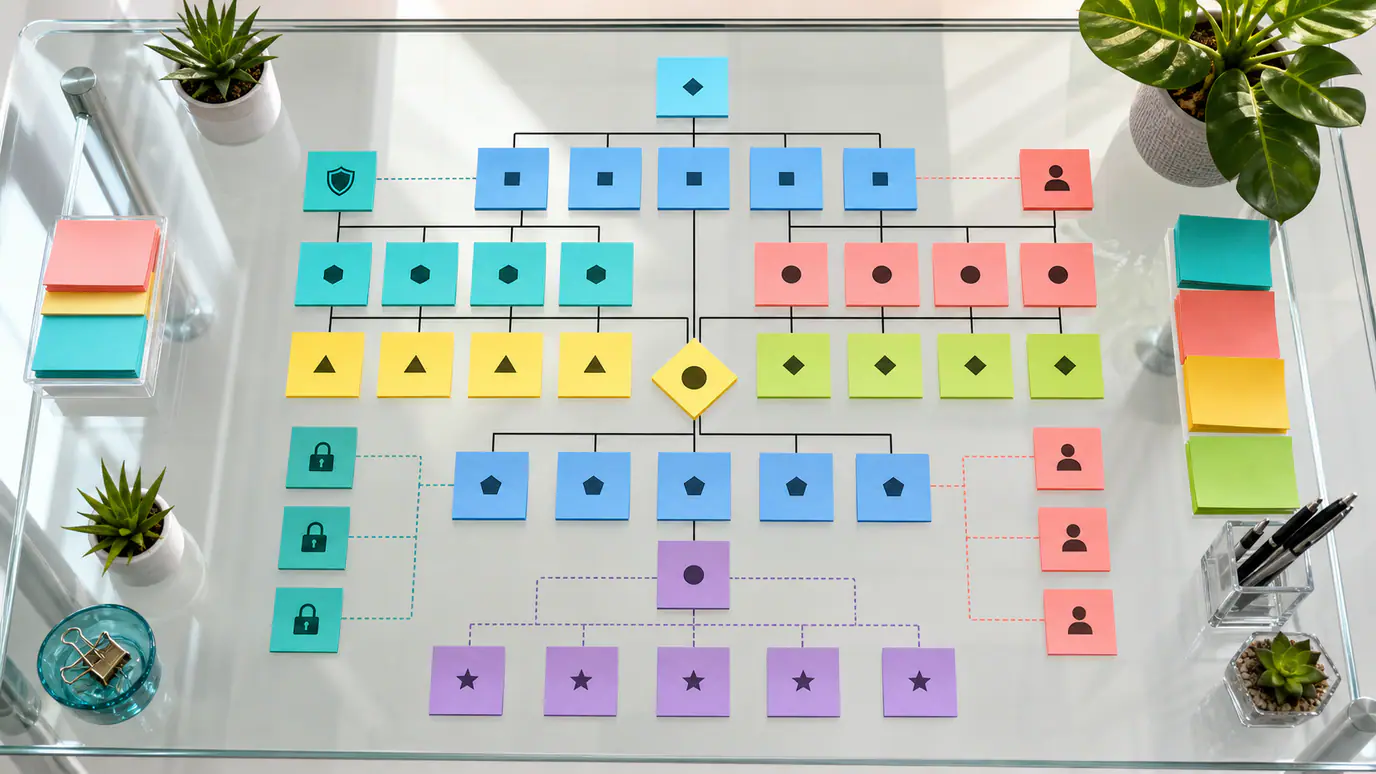
A 30-60-90 Day Onboarding Plan for Outsourced Social Media
A staged 90-day plan reduces brand risk while giving the manager increasing ownership. The first month should prioritize access, documentation, observation, and supervised production. The second month establishes a repeatable operating rhythm. The third month tests whether the employee can improve performance instead of simply completing assigned tasks.
Days 1-30: Learn, document, and produce under review
Provide brand guidelines, customer profiles, approved claims, prohibited language, product demonstrations, previous calendars, top-performing posts, response templates, and examples of unacceptable work. Configure secure access and explain escalation rules. Have the manager audit 90 days of channel data, inventory reusable assets, and build the first two-week calendar. Review every post before publishing and hold two short feedback sessions per week.
Days 31-60: Own the calendar and response workflow
The manager should now run the calendar, deliver drafts by a fixed deadline, schedule approved material, and handle low-risk community responses. Establish a service-level agreement covering draft turnaround, correction deadlines, approval cutoff times, comment checks, and urgent escalation. A workable example is same-business-day escalation for sensitive messages and a weekly report covering output, delays, audience questions, tests, and performance.
Days 61-90: Optimize based on business outcomes
By day 90, the manager should propose experiments based on evidence: new hooks, different content formats, more efficient repurposing, or a change in channel emphasis. Compare the first full month with a pre-hire baseline, accounting for seasonality and advertising changes. Evaluate both operating quality and commercial indicators. Decide whether to expand publishing authority, add creative capacity, revise the role, or end the arrangement before weak routines become permanent.
A practical scorecard can assign 30% to accurate, on-time delivery; 20% to brand and copy quality; 15% to community-response compliance; 15% to audience and traffic quality; 10% to testing and learning; and 10% to documentation and collaboration. The weighting prevents one viral but irrelevant post from masking missed deadlines, risky replies, or poor lead quality.
How to Measure ROI and Choose the Right Outsourcing Model
Measure outsourced social media against revenue-related outcomes and avoided internal labor, not follower growth alone. Sprout Social's 2025 research found that 56% of marketing leaders said social media drives business revenue. A useful monthly return calculation is attributable gross profit plus saved internal labor minus management fees, creative expenses, software, and advertising spend. Divide that result by total social media cost to calculate ROI.
- Operating KPIs: percentage of posts delivered on time, error rate, approval-cycle time, response time, escalation compliance, and planned-versus-completed output.
- Audience KPIs: qualified reach, saves, meaningful comments, video completion, profile actions, and growth among the target customer group.
- Traffic KPIs: tagged sessions, engaged sessions, landing-page conversion rate, assisted conversions, and cost per qualified visitor.
- Commercial KPIs: leads, booked calls, qualified pipeline, customer-acquisition cost, influenced revenue, attributable gross profit, and repeat purchases.
- Risk KPIs: unauthorized access attempts, missed escalations, deleted content, policy violations, incorrect claims, and customer-data incidents.
External case studies demonstrate possible outcomes but not guaranteed causation. In a two-week Hootsuite-sponsored intervention, Apricotton received $5,000 in agency services plus $5,000 in advertising, software, and consulting, then recorded 66,000 impressions and a 108% sales increase. Alt Media Studios reports that Otero Homes gained more than 30% in followers after expanding outsourced multi-platform work. Allora Solutions Group reports 272% higher Facebook reach and 142.7% higher Instagram reach for an unnamed professional-services client over 12 months. Each result is provider-reported or promotional and may reflect advertising, production, SEO, seasonality, or other variables.
Choose a freelancer when the scope is narrow and coordination is simple. Choose an agency when you need several disciplines, strategic oversight, absence coverage, and one accountable vendor. Choose a US employee when local relationships, physical production, executive access, or institutional brand ownership justify the fixed expense. Dedicated offshore staffing makes sense when you have at least 25-30 hours of recurring weekly execution, internal strategic direction, documented approvals, and enough work to benefit from continuity.
Through Borderless Recruit, a dedicated full-time Marketing Specialist for social, content and email starts at $1,100 per month, compared with an estimated $13,636 fully loaded monthly cost for the average US social media manager benchmark. The employee works only for the client on the client's UK or European hours, while recruiting, local contracts, payroll, and HR are handled through one flat monthly invoice.
The practical next step is to document your channels, monthly deliverables, approval process, required working hours, tools, and performance scorecard. Then review the Campaign Manager service page and use the contact page to discuss candidate requirements and a paid skills test. Compare the resulting all-in price with agency scope, internal management time, and a US hire before deciding whether the outsource social media management cost supports your expected return.
Frequently Asked Questions
How much does it cost to outsource social media management?
A narrow freelance engagement may cost below $1,000 per month, while Clutch's verified agency data average approximately $5,107 per month. Offshore salary benchmarks range from about $509 per month in the Philippines to $1,333-$2,500 in monthly base pay for a mid-level Latin American social media manager, before employment or provider costs.
How much should I pay someone to manage my social media?
Pay should reflect required hours, seniority, content formats, platform count, and responsibility for strategy or customer responses. For comparison, LHH reports US manager base salaries of $8,075-$11,692 per month, equivalent to approximately $11,520-$16,681 after applying average private-industry benefits and payroll costs.
Is it worth outsourcing social media management?
Outsourcing can be worthwhile when recurring production and moderation consume at least 25-30 hours per week or prevent senior employees from doing higher-value work. It is less attractive when the company lacks clear positioning, approved claims, usable source material, and someone who can make prompt brand decisions.
Is it better to hire a social media freelancer or an agency?
A freelancer is usually better for a defined skill or limited workload, while an agency is better when you need strategy, creative production, paid media, reporting, and absence coverage. Clutch reports typical listed agency rates of $25-$49 per hour and an average engagement of about $61,149 over 12 months.
What is included in outsourced social media management?
Common services include strategy, content calendars, copywriting, graphics, video editing, scheduling, community management, and performance reporting. Advertising spend, professional photography, influencer fees, premium software, weekend coverage, and crisis communications may cost extra, so the outsource social media management cost should be evaluated using an itemized scope.