
Hire Zapier Automation Expert for Ecommerce Customer Support: 2026 Guide
July 15, 2026 · Borderless Recruit Team
If you plan to hire Zapier automation expert for ecommerce customer support, expect a US-market base salary of $7,208-$10,292 per month, versus advertised full-time ranges of $1,250-$2,500 in the Philippines and $2,600-$3,120 in Latin America. The right specialist can connect Shopify or WooCommerce with Gorgias, Zendesk, Intercom, Klaviyo, Slack, fulfillment tools, and returns platforms. However, the strongest operating model does not automate every conversation: it resolves predictable requests automatically while sending refunds, disputes, fraud concerns, and low-confidence cases to trained people.
What Does a Zapier Automation Expert Do for an Ecommerce Business?
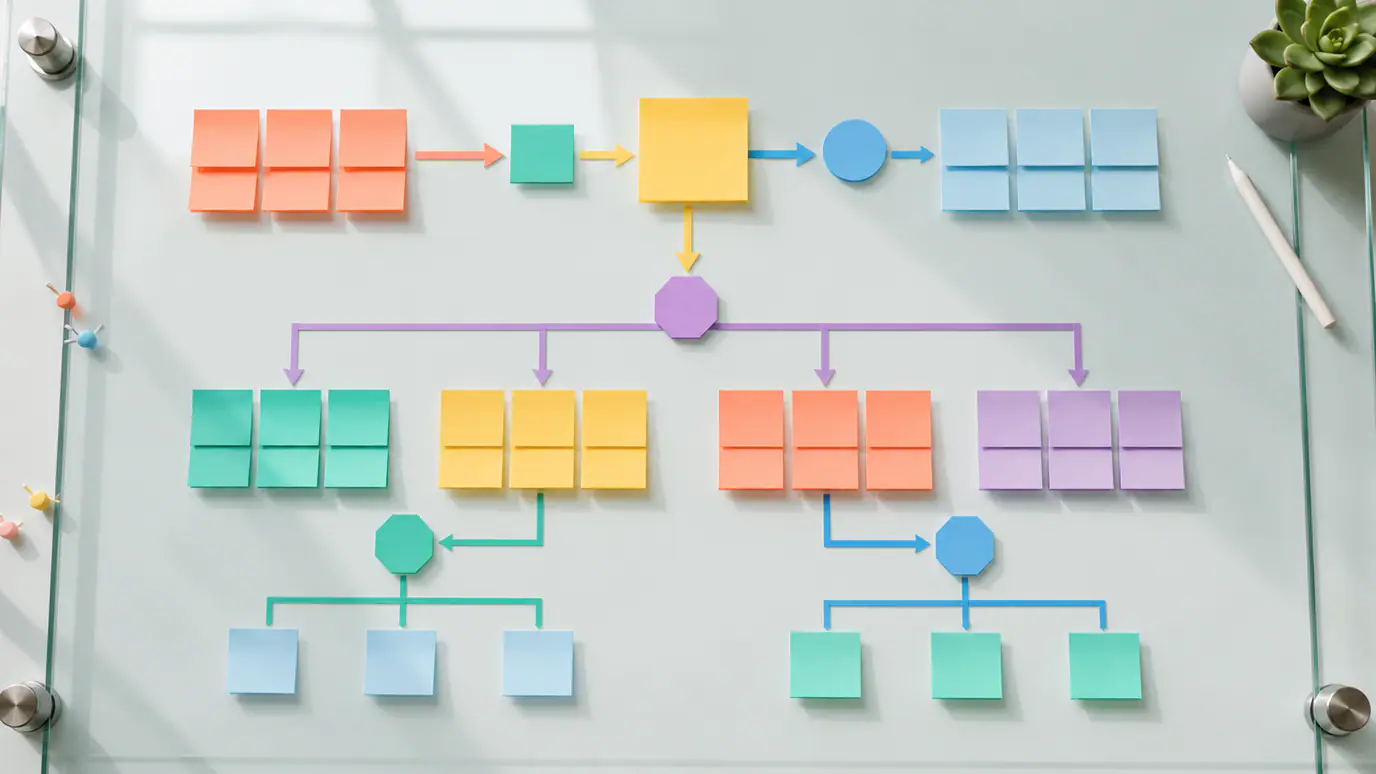
A Zapier automation expert turns support procedures into monitored workflows that move data, make controlled decisions, and alert people when something goes wrong. Basic work includes triggers and actions; production-grade work adds multi-step Zaps, filters, paths, webhooks, API calls, data transformation, custom code, retries, logging, and human approval steps. The expert also documents why each rule exists so a support manager can safely change it later.
For ecommerce support, that means more than connecting two applications. The specialist must understand order states, fulfillment timing, refund eligibility, return windows, customer identity, fraud flags, ticket priorities, and service-level agreements. A workflow that automatically refunds an ineligible order is not successful merely because every Zap step ran without an error.
- Map the current support process, including manual lookups, approval points, exceptions, and handoffs between support, fulfillment, finance, and marketing.
- Connect commerce, help-desk, CRM, messaging, returns, accounting, and analytics systems without unnecessary duplicate records.
- Build filters and paths that distinguish routine requests from sensitive cases requiring human judgment.
- Test normal, incomplete, duplicate, and out-of-order data before releasing an automation to customers.
- Monitor task consumption, authentication failures, API limits, missed triggers, and downstream application errors after launch.
This broader skill set matters because Zapier says its platform connects more than 9,000 applications and over 450 AI tools. More connections create more possibilities, but they also create more dependencies. An ecommerce specialist should be accountable for the complete customer outcome, not simply for switching on a collection of Zaps.
When to Hire Zapier Automation Expert for Ecommerce Customer Support Operations
You should hire a specialist when repetitive support work consumes at least 15-20 staff hours per week, ticket volume regularly exceeds your team's capacity, or important workflows now span three or more systems. Another clear signal is operational fragility: one employee knows how the automations work, failed tasks sit unnoticed, or a credential change can silently stop customer updates.
The volume behind those problems is expanding. The US Census Bureau estimated 2025 retail ecommerce sales at $1.2337 trillion, up 5.4% and equal to 16.4% of total retail sales. In Q1 2026, ecommerce sales reached $326.7 billion, rising 9.8% year over year while total retail grew 3.9%. Faster digital sales growth creates more order-status, delivery, cancellation, return, payment, and account-access contacts.
- Hire for a defined project when you need a workflow audit, migration, integration repair, or bounded initial build.
- Hire for ongoing ownership when product catalogs, promotions, fulfillment rules, support channels, and application schemas change frequently.
- Prioritize an industry specialist when automations can change orders, issue refunds, expose customer data, or affect a published response-time commitment.
- Keep the work with an internal operator if there are only a few low-volume Zaps and failures have little customer or financial impact.
Support is also becoming more omnichannel. A 2025 Gartner survey of 5,801 customers found that 51% of service journeys began on third-party platforms such as Google, YouTube, and ChatGPT; among Gen Z, the figure was 74%. Automation must therefore capture intent and context across channels instead of assuming every customer starts on the merchant's help page.

Customer-Support Tasks You Can Automate With Zapier
The safest ecommerce automations handle high-volume requests with reliable data and explicit business rules. Begin with read-only lookups and internal notifications, then add customer-facing actions after measuring accuracy. Refunds, cancellations, and order edits should require approval until the team has validated every eligibility rule and exception.
- Order status: retrieve fulfillment and carrier information from Shopify or WooCommerce, attach it to a Gorgias, Zendesk, or Intercom conversation, and send an approved status response when identity and order data match.
- Ticket routing: classify intent, language, sentiment, value, and urgency; assign the conversation to shipping, returns, billing, technical support, or a VIP queue; and notify Slack when an SLA is at risk.
- Cancellations: check payment and fulfillment states, approve only unfulfilled eligible orders, update the commerce platform, and escalate warehouse conflicts or suspected fraud.
- Returns and refunds: create a returns-platform record, validate the return window and product category, request human approval for exceptions, and write the final status back to the help desk.
- Review requests: wait for confirmed delivery plus a defined buffer, exclude refunded or unresolved orders, and enroll eligible customers in an appropriate Klaviyo follow-up.
- Quality control: sample automated conversations, flag negative sentiment or repeated contacts, create an investigation task, and record the failure reason for later workflow improvement.
A practical workflow stores the order ID, customer ID, ticket ID, automation version, decision, timestamp, and escalation reason. Those fields make audits possible and help prevent a retry from issuing a second refund or sending a duplicate message. Idempotency checks are particularly important when webhooks are delivered more than once.
Vendor-published examples show the potential scale, although their results are not necessarily independently audited. Zapier reports that Learn It Live built a chatbot in under one hour and reduced repetitive support tickets by 40%. Its SmartClick Systems case study describes an ecommerce client that automated order management, returns, and support and doubled production within one month.
Essential Ecommerce Integrations and Failure Controls
A reliable support stack connects the store, help desk, communications layer, and system of record while making failures visible. Shopify or WooCommerce usually supplies order data; Gorgias, Zendesk, Freshdesk, or Intercom owns the ticket; Klaviyo manages lifecycle messages; Slack handles internal alerts; and a returns platform governs return labels and dispositions. Accounting updates may require review by a Bookkeeper before financial records change.
Zapier's current Shopify integration supports events involving new orders, refunds, cancellations, customers, fulfillment, abandoned carts, and fraud risk. Shopify is a premium Zapier integration that requires a paid plan. Many triggers use webhooks and fire promptly, while polling-based triggers run at intervals, so the chosen trigger directly affects the response time customers experience.
Common ecommerce support failures and required controls
| Failure | Customer risk | Recommended control |
|---|---|---|
| Duplicate webhook or retry | Repeated message, return, or refund | Use order and event IDs as idempotency keys before writing data |
| Expired credential | Orders or tickets stop synchronizing | Centralize credentials, monitor authentication errors, and assign an owner |
| Malformed or missing data | Incorrect routing or personalized response | Validate required fields and send incomplete records to a human queue |
| Missed or delayed trigger | Late response or breached SLA | Run reconciliation checks against source records and alert on stale events |
| API rate limit | Backlog, timeout, or partial update | Queue requests, use controlled retries, and track throughput by application |
| Low-confidence AI decision | Inaccurate or inappropriate customer action | Block automated execution and return the case to a trained support agent |
Capacity planning matters at scale. Zapier documents a standard Shopify limit of 40 requests per minute and 400 per minute for Shopify Plus. A holiday spike can overwhelm a design that performs several API calls per ticket. Batch nonurgent work, reduce redundant lookups, use exponential backoff, and reconcile source records after an outage instead of assuming every missed event will automatically replay.
Where Human Support Agents Still Add the Most Value
Human-in-the-loop support is the best default for payments, disputes, unusual returns, fraud indicators, account access, emotionally charged conversations, and low-confidence classifications. Automation should assemble the order history, policy, prior contacts, and recommended response; a Customer Support Rep should make the consequential decision when context or customer intent remains uncertain.
According to Zapier's Mercari case study, an AI support orchestration system fully resolves about 47,000 of Mercari's 120,000 monthly tickets and frees more than 3,000 agent hours each month. The system provides first replies for 97% of tickets and reportedly improved CSAT by one point on a five-point scale. Failed or low-confidence cases return to Mercari's standard human process, demonstrating that extensive automation and an explicit human fallback can coexist.
Other vendor-published cases illustrate how preparation can matter as much as full resolution. Zapier reports that ClickUp reduced research time for more than 5,000 monthly tickets from 15 minutes to four minutes, saving about 917 support hours per month. Calendly connected qualified Zendesk tickets to Salesforce and customer feedback to Airtable, reporting collective savings above 10 hours per week.
- Automate when the intent is clear, source data is complete, the action is reversible, and the policy has few exceptions.
- Require approval when money, identity, legal exposure, account security, fraud, or an irreversible order change is involved.
- Escalate immediately when sentiment is highly negative, the customer has contacted support repeatedly, an SLA is near breach, or automation confidence is below the documented threshold.
After-hours offshore staffing can strengthen this model. A Philippines-based agent can monitor failures and queues during much of the US night, while Latin American staff offer easier overlap with US operations and engineering teams. The goal is not to remove people from support; it is to reserve their attention for conversations where judgment changes the outcome.

Freelancer vs. Agency vs. Dedicated Offshore Zapier Expert
Freelancers and Zapier Solution Partners are usually best for audits, migrations, emergency repairs, and bounded implementations; a dedicated specialist is better when workflows are business-critical and change every week. Upwork says global API developers have historically charged about $20-$40 per hour, although experienced Zapier consultants may charge more. A 100-hour build at that benchmark would cost $2,000-$4,000 before ongoing maintenance.
Hiring model comparison for ecommerce support automation
| Model | Best use | Main advantage | Main limitation |
|---|---|---|---|
| Freelancer | Audit, repair, prototype, or defined build | Flexible project commitment | Availability may be limited after launch |
| Certified partner or agency | Complex implementation or migration | Broader bench and project management | Higher project cost and possible handoff after delivery |
| US employee | Sensitive systems and highly synchronous stakeholder work | Local collaboration and long-term ownership | Highest salary and employment overhead |
| Philippine dedicated specialist | Ongoing monitoring, optimization, and overnight coverage | Lowest direct labor range and large IT-BPM talent pool | Requires deliberate US-hours scheduling |
| Latin American dedicated specialist | Continuous improvement with US workday collaboration | Strong time-zone overlap | Typically costs more than Philippine talent |
Location should follow the operating requirement. According to IBPAP data reported by the Philippine News Agency, the Philippine IT-BPM industry exceeded $40 billion in 2025 revenue and employed 1.89 million people; revenue grew 5% and employment grew 4%. In 2024, the sector generated $38 billion, employed 1.82 million people, and added approximately 120,000 direct jobs.
Latin America costs more but offers easier US workday overlap. The Inter-American Development Bank estimates that nearshoring could add $78 billion annually to regional exports. It also reports that Latin American and Caribbean knowledge-based service exports grew by an average 4.7% annually over the past decade; service exports rose 9.5% in Q1 2024, versus 7.1% globally.
How Much Does It Cost to Hire a Zapier Automation Expert?
A US Zapier automation specialist costs roughly $7,208-$10,292 per month in base salary, while illustrative offshore listings range from $1,250-$3,120 per month depending on location and skill requirements. Salary is not total cost: an agency, employer-of-record provider, equipment allowance, benefits package, software, currency conversion, and management time can change the final budget.
US and offshore monthly salary comparison in 2025-2026
| Role | US base and illustrative loaded cost | Philippines | Latin America | Savings versus US loaded cost |
|---|---|---|---|---|
| Zapier or no-code automation specialist | $7,208-$10,292 base; $10,306-$14,712 loaded | $1,250-$2,500 | $2,600-$3,120 | Philippines 76%-92%; Latin America 70%-82% |
| Ecommerce customer support specialist | $2,557-$5,228 base; $3,655-$7,474 loaded | $438-$519 | $1,250-$1,672 | Philippines 86%-94%; Latin America 54%-83% |
| Customer support or help-desk manager | $3,750-$6,500 base; $5,360-$9,291 loaded | $1,183-$1,588 | $2,000-$3,100 | Philippines 70%-87%; Latin America 42%-78% |
According to ZipRecruiter and current offshore job listings, a US-market Zapier automation specialist typically earns $7,208-$10,292 per month, compared with advertised ranges of $1,250-$2,500 in the Philippines and $2,600-$3,120 in Latin America. The Philippine range came from a 2025 full-time low-code workflow listing; the Latin American role specifically required Zapier, OpenAI, APIs, and webhooks.
According to the US Bureau of Labor Statistics, benefits and legally required costs added about 43% to private-industry wages in March 2026, before company-specific recruiting, equipment, software, and office overhead. Employers spent $32.60 per hour on wages and $14.01 on benefits. Employer Social Security and Medicare alone generally total 7.65% in 2026 before unemployment taxes and other benefits.
Calculate ROI from hours saved and avoided cost, not salary arbitrage alone. If automation saves 120 hours monthly and loaded support labor costs $30 per hour, gross capacity value is $3,600. Subtract the specialist, Zapier plan, AI usage, and maintenance costs; then track whether response time, accuracy, and CSAT remain stable. The savings calculator can help compare staffing scenarios, but your final model should include software and management costs.
The market is increasingly comfortable combining outsourced teams with automation. Deloitte's 2024 survey of more than 500 global executives found that 83% were using AI within outsourced services, although governance and contracting challenges limited realized productivity and cost benefits. Grand View Research projects the call and contact-center outsourcing market to rise from $97.31 billion in 2024 to $163.86 billion by 2030; it values the broader outsourced customer-care market at $77.1 billion in 2024 and projects $113.2 billion by 2030.
How to Evaluate Candidates and Protect Customer Data
The strongest candidate can explain failure behavior, customer risk, and business rules—not merely show a large number of Zaps. Use a hands-on test based on a sanitized ecommerce scenario. Ask the candidate to route a shipping inquiry, handle missing order data, prevent duplicate actions, escalate a refund, and document how the workflow should recover from an expired credential.
- Zapier architecture: multi-step Zaps, filters, paths, loops, webhooks, custom API requests, data formatting, and appropriate use of code.
- Ecommerce knowledge: order, payment, fulfillment, cancellation, fraud, return, and refund states in Shopify or WooCommerce.
- Support judgment: SLA prioritization, sentiment handling, identity verification, escalation rules, and customer-friendly written English.
- Reliability engineering: retries, idempotency, rate limits, reconciliation, alerting, audit trails, rollback plans, and incident review.
- Documentation: process maps, field mappings, credential ownership, test cases, change history, and plain-language operating instructions.
Score the exercise before interviewing. A practical rubric could assign 30% to technical design, 25% to error handling, 20% to ecommerce judgment, 15% to documentation, and 10% to English communication. Certification or partner status can support credibility, but it should not substitute for testing the exact Shopify, WooCommerce, Gorgias, Zendesk, or Intercom work the person will own.
- Apply least-privilege access and separate development, testing, and production permissions where the applications allow it.
- Provide credentials through a business password manager; never send passwords through tickets, chat messages, or personal email.
- Mask customer names, addresses, phone numbers, payment details, and access tokens in test data, logs, screenshots, and AI prompts.
- Enable application audit logs, require multifactor authentication, review integrations quarterly, and alert on new administrators or token creation.
- Maintain an offboarding checklist that disables accounts, revokes tokens and webhooks, transfers ownership, rotates shared secrets, and verifies documentation.
Remote work itself is no longer unusual. Gallup reported that remote-capable roles represent roughly half of the US workforce. In Q2 2025, 28% of remote-capable US employees worked exclusively remotely, 51% were hybrid, and 21% worked fully on-site. The security question is therefore not whether someone is offshore; it is whether access, devices, data handling, auditability, and offboarding are properly controlled.
A 30-60-90 Day Onboarding and Performance Plan
A 90-day plan should move from observation to controlled deployment and then documented ownership. Do not judge the hire by the number of workflows launched. Judge whether automations save verified time, remain reliable during real order volume, and improve service without increasing refunds, repeat contacts, or customer complaints.
Days 1-30: Baseline and Map
- Document ticket volume by intent, channel, day, and hour; record first-response time, resolution time, CSAT, repeat-contact rate, and current manual hours.
- Inventory Zaps, applications, owners, credentials, task usage, data fields, APIs, webhooks, and undocumented manual workarounds.
- Select two low-risk workflows, such as internal SLA alerts and read-only order-context enrichment, and establish test and rollback procedures.
Days 31-60: Build and Validate
- Release workflows to a limited ticket segment, compare automated decisions with agent decisions, and classify every mismatch.
- Add logging, duplicate prevention, retries, rate-limit handling, credential alerts, low-confidence escalation, and daily reconciliation.
- Train support agents to recognize automation failures and collect structured feedback instead of fixing problems through untracked manual work.
Days 61-90: Scale and Transfer Knowledge
- Expand only workflows that meet accuracy, reliability, CSAT, and escalation targets; keep high-risk actions behind human approval.
- Create runbooks, diagrams, field maps, change logs, incident procedures, and a prioritized improvement backlog.
- Cross-train a backup owner and run a simulated credential failure, API throttling event, duplicate webhook, and staff handoff.
Core ecommerce support automation KPIs
| KPI | What it measures | How to use it |
|---|---|---|
| First-response time | Time from ticket creation to meaningful response | Compare automated, human, channel, and time-of-day cohorts |
| Resolution time | Time until the customer's issue is actually closed | Watch for fast replies that create slow or repeated resolutions |
| Ticket deflection | Contacts avoided or resolved without agent work | Validate against repeat contacts and unresolved demand |
| Automation failure rate | Failed or incorrect runs divided by eligible runs | Break down by workflow, application, and failure cause |
| Task consumption | Zapier tasks used per completed customer outcome | Find wasteful loops, repeated lookups, and cost spikes |
| CSAT | Customer satisfaction after service | Compare human, automated, and hybrid interactions |
| Hours saved | Verified manual time removed from the process | Multiply by loaded labor cost for an ROI input |
Review these metrics together. High ticket deflection with falling CSAT may mean customers cannot reach a person. Faster first responses with unchanged resolution time may indicate empty acknowledgments rather than useful automation. A mature program ties specialist performance to customer outcomes, documented reliability, and continuous improvement—not only hours worked or Zaps delivered.
Building a Scalable Automation and Support Team
A scalable team separates workflow ownership from customer judgment while giving both roles a shared operating system. The automation specialist owns integrations, monitoring, testing, documentation, and incident analysis. Support agents own nuanced communication and exceptions. A Full-Stack Developer joins when the workflow requires a custom application, complex middleware, or deeper API work that exceeds a no-code platform's practical limits.
Choose the location around coverage and collaboration. Philippine talent is well suited to cost-sensitive monitoring and follow-the-sun operations, while Latin American professionals provide stronger overlap with a typical US workday. Whichever location you select, require scheduled overlap for incident reviews, weekly KPI analysis, change approvals, and cross-training. Backup ownership is essential because business-critical automations should never depend on one person's availability.
Through Borderless Recruit, a dedicated full-time AI automation specialist starts at $1,300 per month, compared with illustrative loaded US Zapier-specialist compensation of $10,306-$14,712 per month. The practical next step is to review the hire an AI automation specialist service, document your current applications and three highest-volume ticket types, and use the contact page to discuss the required skills, work hours, security controls, and human support coverage.
Before hiring, define the outcome in operational terms: hours removed, response time improved, error rate reduced, or coverage extended. Then require a paid practical test, controlled production access, measurable 30-60-90 day milestones, and a documented human fallback. Those safeguards matter more than a candidate's tool vocabulary when you hire Zapier automation expert for ecommerce customer support.
Frequently Asked Questions
What does a Zapier automation expert do?
A Zapier automation expert maps business rules and builds monitored workflows using triggers, actions, filters, paths, webhooks, APIs, data transformation, and sometimes custom code. For ecommerce support, the expert connects order and ticket data while adding retries, duplicate prevention, audit trails, and human escalation.
How much does it cost to hire a Zapier expert?
US-market base salaries are approximately $7,208-$10,292 per month, with illustrative loaded compensation of $10,306-$14,712 after adding the BLS private-industry benefit ratio of roughly 43%. Relevant listings advertised $1,250-$2,500 per month in the Philippines and $2,600-$3,120 in Latin America, excluding possible agency, equipment, software, and management costs.
Can Zapier automate ecommerce customer support?
Yes. Zapier can enrich tickets with order data, route conversations, send SLA alerts, start eligible returns, update records, and trigger post-delivery review campaigns. Refunds, disputes, fraud concerns, account access, and uncertain cases should generally retain human approval.
Does Zapier integrate with Shopify and customer-support platforms?
Zapier's Shopify integration supports events including orders, refunds, cancellations, customers, fulfillment, abandoned carts, and fraud risk, and Shopify is a premium integration requiring a paid Zapier plan. Zapier can connect that data to platforms such as Gorgias, Zendesk, Intercom, Klaviyo, and Slack, subject to each application's available triggers, actions, and API limits.
How do I hire a certified Zapier expert?
Use certification or partner status as one credibility signal, then require a practical test involving ecommerce data, webhooks, error handling, documentation, and a human escalation path. When you hire Zapier automation expert for ecommerce customer support, score both technical execution and customer-service judgment because a technically successful workflow can still make an incorrect refund or routing decision.